
East Asian–Australasian Flyway

Bangladesh to the world

A small delta with nature of global value.

Migratory birds link Bangladesh to Siberia, East Asia and Australasia along the East Asian–Australasian Flyway. Siberia East Asia Bangladesh Australasia

Bangladesh holds the largest mangrove forest in the world, a Ramsar-listed haor and wetland system, a Bay of Bengal coast where sea turtles nest, and winter habitat for migratory birds that link Bangladeshi villages to flyways across Asia. It is also among the countries most exposed to climate change. BBCF’s volunteers turn this global responsibility into local action.

Know the country

Bangladesh: facts and nature

  • 147,570 km²Total area
  • 169.8 millionPeople (2022 census)
  • About 1,150People per km²
  • 64Districts in 8 divisions
  • 125Tigers in the Sundarbans (2024 count)
  • 60+Protected areas on land and at sea
  • 2Ramsar wetlands of international importance
  • 700+Bird species recorded

Sources: Bangladesh Bureau of Statistics, Population and Housing Census 2022; IUCN Red List of Bangladesh 2015; Bangladesh Forest Department (tiger survey 2024, international conventions); Ramsar Convention; UNESCO World Heritage Centre. Figures are rounded and are updated by BBCF as new data appear.

About Bangladesh

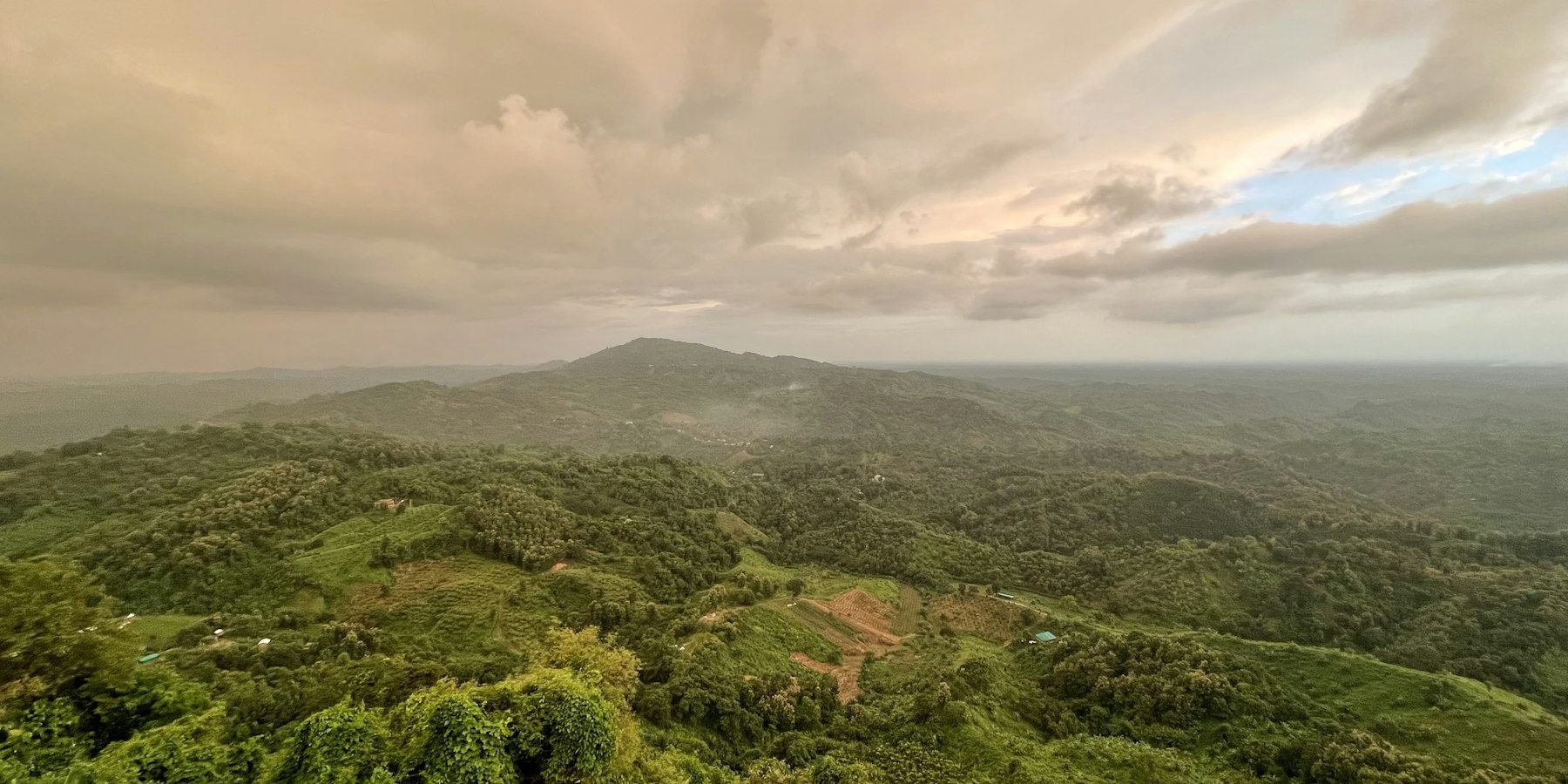
Bangladesh lies on the largest river delta in the world, built by the Ganges (Padma), the Brahmaputra (Jamuna) and the Meghna as they meet the Bay of Bengal. Most of the country is flat, fertile floodplain only a few metres above sea level; hills rise only in the north-east around Sylhet and in the Chittagong Hill Tracts in the south-east. A tropical monsoon brings most of the year’s rain between June and October, and rivers, wetlands and the sea shape farming, fishing and daily life.
People and demography

The 2022 Population and Housing Census counted about 169.8 million people on 147,570 square kilometres: roughly 1,150 people per square kilometre, one of the highest densities in the world. About two thirds of Bangladeshis live in villages, and millions depend directly on rivers, wetlands, forests and the sea for food and income. Healthy nature is therefore a question of everyday survival, not only of conservation.

Landscapes

Landscapes of the delta

  • Sundarbans mangroves

    The largest mangrove forest on Earth, shared with India; about 6,000 km² lies in Bangladesh. Home of the Royal Bengal tiger, river dolphins and estuarine crocodiles.

  • Hill forests

    Tropical evergreen and semi-evergreen forests of the Chittagong Hill Tracts and Sylhet, with Asian elephants, hoolock gibbons and hornbills.

  • Sal forests

    Deciduous sal forests of the central and northern districts, such as Madhupur and Bhawal.

  • Haor and beel wetlands

    Seasonal floodplain wetlands of the north-east, such as Tanguar and Hakaluki haor, the winter home of migratory waterbirds.

  • Rivers and floodplains

    Hundreds of rivers and their floodplains, rich in freshwater fish and home of the Ganges river dolphin.

  • Coast and islands

    Mudflats, chars, beaches and islands such as Nijhum Dwip and Saint Martin’s Island, the country’s only coral island.

  • Barind tract

    The drier, slightly higher red-soil land of the north-west, with its own farming and wildlife.

Wildlife

Wildlife of Bangladesh

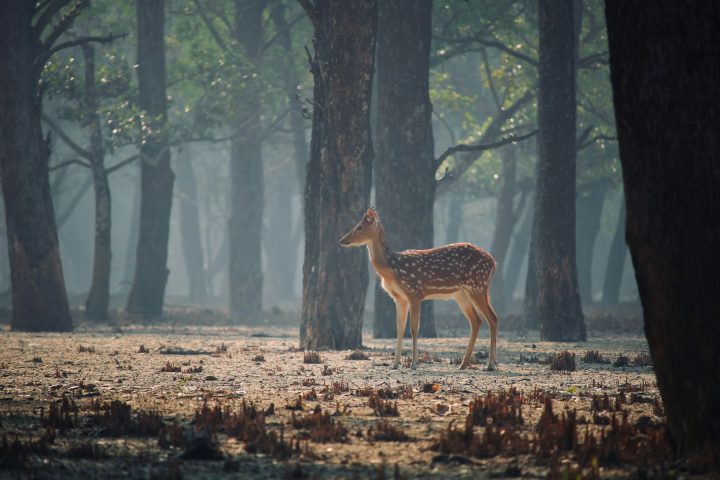
Bangladesh is home to a rich mix of Indian and Indo-Chinese wildlife. The IUCN Red List of Bangladesh (2015) assessed 1,619 animal species in seven groups and found 390 of them threatened; 31 species are already extinct in the country, among them all three rhinoceros species, the wild water buffalo and the swamp deer. The Sundarbans tiger population, counted at 125 in 2024, has grown since 2015 thanks to better protection.

  • Royal Bengal tigerSundarbans mangrove forest
  • Asian elephantHill forests of Chattogram and Cox’s Bazar
  • Ganges river dolphinLarge rivers such as the Padma, Jamuna and Meghna
  • Irrawaddy dolphinCoastal rivers and the Sundarbans
  • Western hoolock gibbonHill forests of Sylhet and Chattogram
  • Spoon-billed sandpiperCoastal mudflats in winter
  • Olive ridley turtleNesting beaches of Cox’s Bazar and Saint Martin’s Island

Wild lands and protected areas

Bangladesh protects its forests, wetlands and seas through national parks, wildlife sanctuaries, eco-parks, special biodiversity conservation areas and marine protected areas: about 60 sites, depending on how they are counted. The Sundarbans has three wildlife sanctuaries and is both a UNESCO World Heritage site (1997) and a Ramsar wetland (1992); Tanguar Haor became the second Ramsar site in 2000.

Marine ecosystem

Since the sea boundaries with Myanmar (2012) and India (2014) were settled, Bangladesh’s waters in the Bay of Bengal cover about 118,800 km². They include the long sandy beach of Cox’s Bazar, coral communities around Saint Martin’s Island, estuaries, mudflats and the deep Swatch of No Ground canyon, a marine protected area used by whales and dolphins. These waters feed one of the region’s richest fisheries, including the hilsa, but overfishing, plastic, pollution and a warming climate put them under pressure.

Main issues

Main biodiversity issues

  • Habitat loss

    Forests, wetlands and char lands are cleared or converted for farming, settlements, roads and industry.

  • Hunting and wildlife trade

    Birds, turtles, reptiles and mammals are trapped, poached and traded illegally, inside the country and across borders.

  • Human–wildlife conflict

    Elephants raid crops in the south-east, and tigers, crocodiles and snakes come into contact with people near forests.

  • Pollution and plastic

    Industrial waste, agrochemicals, untreated sewage and plastic damage rivers, wetlands and the sea.

  • Climate change and salinity

    Sea-level rise, stronger cyclones, floods and rising salinity in the south-west affect the Sundarbans and coastal life.

  • Overfishing and dying rivers

    Harmful nets, overfishing, sand extraction and drying rivers threaten fish, dolphins and waterbirds.

Laws

Laws that protect nature

Wildlife and environment laws

  • Wildlife (Conservation and Security) Act, 2012The main wildlife law: protects listed species, sets up protected areas and the penalties for hunting, keeping or trading wildlife; trade in endangered species needs a CITES permit.
  • Bangladesh Biodiversity Act, 2017Conserves biodiversity, ensures its sustainable use and fair sharing of the benefits of biological resources, and provides for biodiversity heritage sites.
  • Protected Area Management Rules, 2017Rules under the Wildlife Act for running protected areas, including co-management with local people.
  • Forest Act, 1927The basis of reserved and protected forests and their management.
  • Bangladesh Environment Conservation Act, 1995Pollution control, ecologically critical areas and environmental clearance, with the Environment Conservation Rules, 2023.
  • Protection and Conservation of Fish Act, 1950Fishing seasons, banned nets and gear, and fish sanctuaries in rivers and wetlands.

Climate laws and plans

  • Bangladesh Climate Change Strategy and Action Plan, 2009The country’s first long-term plan for adapting to climate change and lowering emissions.
  • Climate Change Trust Act, 2010Created a national climate fund financed from the government’s own budget.
  • Disaster Management Act, 2012Disaster risk reduction, early warning and emergency response.
  • Bangladesh Delta Plan 2100A long-term plan (2018) for water, land and climate resilience of the delta.
  • National Adaptation Plan 2023–2050Priorities for adapting farming, water, ecosystems and cities to a changing climate.
  • Nationally Determined Contribution, 2021Bangladesh’s pledge under the Paris Agreement to cut greenhouse gas emissions.

International commitments

International conventions Bangladesh has joined

Convention or agreementYearStatus
CITES, trade in endangered species1982Signed 1981, ratified 18 February 1982
World Heritage Convention1983Ratified 3 November 1983
Ramsar Convention on Wetlands1992Ratified 20 April 1992
Convention on Biological Diversity (CBD)1994Signed 1992, ratified 20 March 1994
UN Framework Convention on Climate Change1994Ratified
UN Convention to Combat Desertification1996Ratified 26 January 1996
Kyoto Protocol2001Joined
IOSEA marine turtle agreement2003Signed 23 October 2003
Convention on Migratory Species (CMS)2005Signed 1 December 2005
East Asian–Australasian Flyway Partnership2010Joined
South Asia Wildlife Enforcement Network2013Joined
Paris Agreement2016Ratified
Central Asian Flyway2023Joined 13 April 2023

Scope for conservation

Where conservation can grow

  • Community-based conservation

    Volunteers, village committees and land owners protect bird colonies, wetlands and forests where they live.

  • Citizen science

    Bird counts, rescue records and volunteer reports give data for research and policy.

  • Restoration

    Replanting mangroves and native forests and reviving wetlands and rivers.

  • Nature-based livelihoods

    Responsible ecotourism, sustainable fishing and forest products give people reasons to protect nature.

  • Education and awareness

    Schools, campuses and the media build a generation that values wildlife.

  • Research and partnerships

    Universities, government and international networks work together for species and habitats.

Bangladesh at a glance

A small delta with nature of global value

The Sundarbans, the world’s largest mangrove forest and a World Heritage property; Ramsar wetlands, haors and beels; a Bay of Bengal coast where sea turtles nest; winter habitat for migratory birds; and one of the countries most exposed to climate change.

The Sundarbans

Global frameworks

BBCF’s volunteers deliver community-level action that supports the Kunming-Montreal Global Biodiversity Framework and its 2030 targets.

Flyways and partners

BBCF has co-hosted World Migratory Bird Day in Bangladesh and has been recognised by EAAFP, CMS and the World Bank.

Join a network

Conservation organisations, universities, researchers and development partners in Bangladesh and abroad can work with BBCF on field projects, research, training and knowledge exchange. Every gift helps our 45,000+ volunteers protect wildlife and natural habitats across the country.

Donate BBCF